Bream Bay Kindergarten Video

Showing posts with label Social Competency. Show all posts

Thursday, January 28, 2021

Dirt - a little bit of what's good for you!


Connecting children with nature is important to us at Bream Bay Kindergarten...hands on, deeply engaging experiences where children and teachers revel in the joy of being immersed in nature together.

Under the protective shade of an old tree, dirt beckons...just enough water is added and the fun begins!


10 reasons why we should let children play in mud...

1· Playing in mud is good for reconnecting children back to nature and developing an appreciation and love of nature.

"No one will protect what they don't care about, and no one will care about what they have never experienced"
David Attenborough


2· Playing in mud is a whole body experience and develops small and large motor skills.


3· Anyone can play in mud...it’s a very inclusive game.


4· Playing in mud is a hands on sensory experience that helps children develop their working theories of the world around them.


5· Playing in mud helps children develop positive dispositions such as sharing and playing co-operatively.


6· Mud is a wonderful art medium and children love to get creative.


7· Playing in mud develops creative thinking and sparks the imagination.


8· Playing in mud can make you healthier by building up the immune system.


9· Playing in mud is just good fun...lets face it, playing in mud makes you feel happy!  Regular doses of smiling, laughing and having fun is well recognized as having a positive impact on overall health and well being.

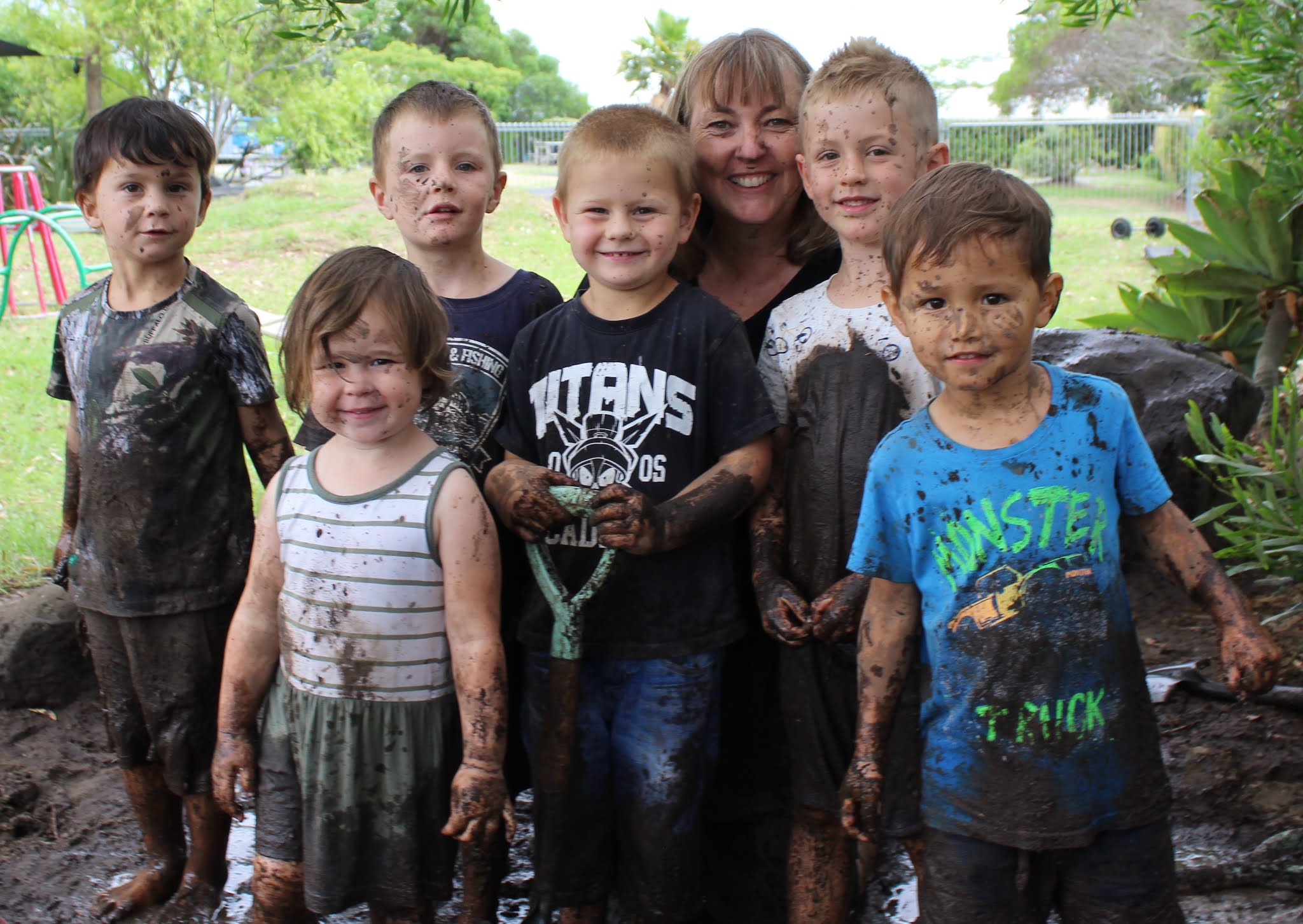


10· Mud covers a wide range of curriculum areas such as science, language, social competency and physical education...so much to learn!
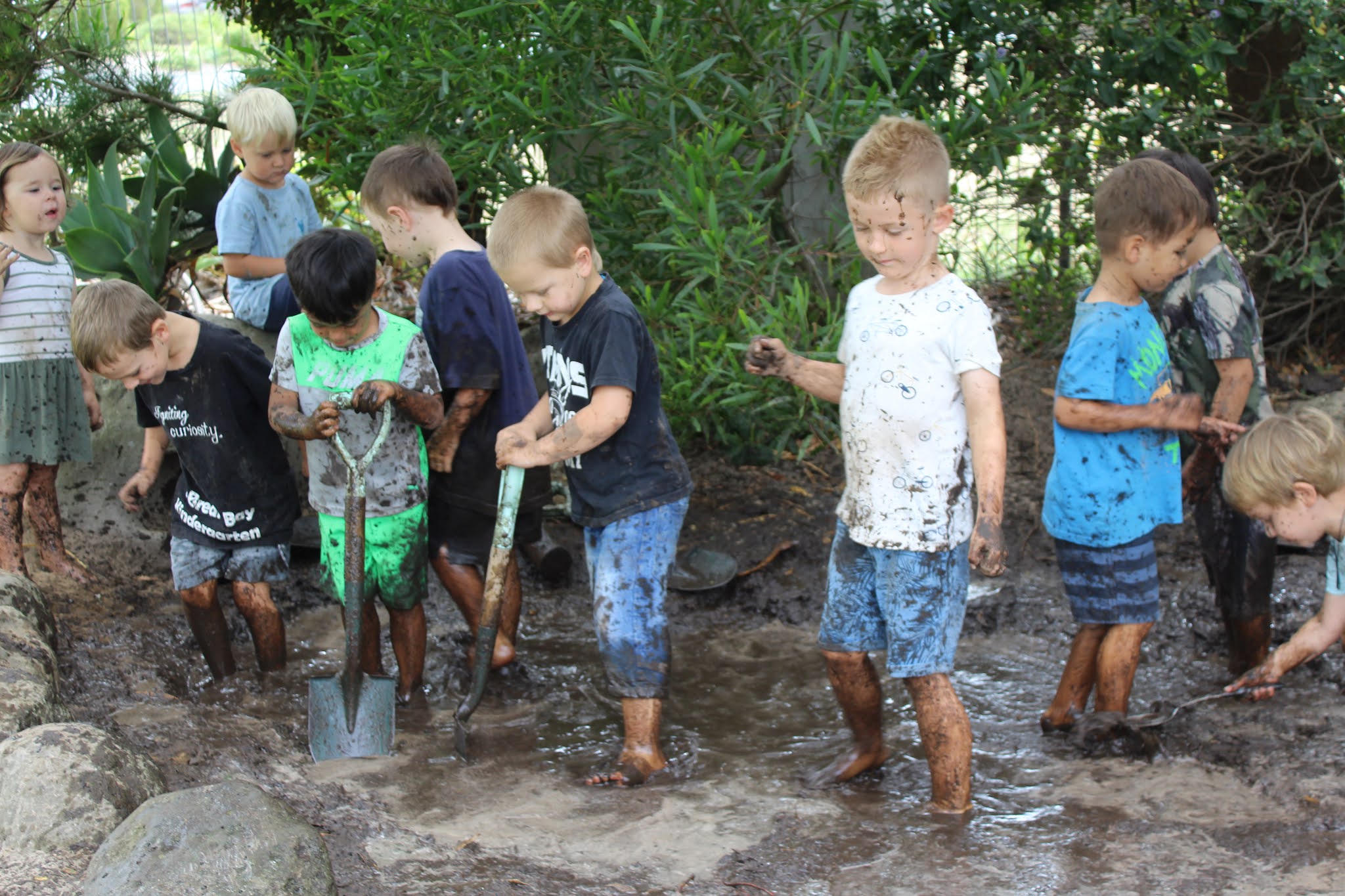

What does mud feel like?

The language of mud...

Slippery, slimy, gooey, wet, soggy, damp, moist, waterlogged, squelchy, clammy, cold, chilly, mucky, squishy, sticky, mushy, runny, gluey, gummy, thick, tacky, messy, smooth, velvety, bumpy, course, jagged, rough, soft, soggy, squashy squidgy, spongy, springy, pliable, pulpy, yielding, elastic, stretchy, soaking, dripping, saturated, drenched, glorious, wonderful, splendid, superb, magnificent, brilliant, superlative, marvellous mud!


Revisiting the experience...

"Playing in the deep hole, it was so deep and so muddy.  I was happy cause I love the mud" said Carter.

"You get dirty in the mud.  Sand and water makes mud" said Neo.


"The mud is dirty" said Emma.

"I sat in the mud and it was mucky" said Harvey.

"It was fun when we were covering our feet" said Bodhi.


"It was fun when we were squishing in the big hole.  We were stamping and stomping and jumping around" said Lockie.


"I was jumping in the mud" said Tahu.

The mud was cold" said Tangaroa.

"I made some mud with the water, a spoon and dirt.  You splash the water over the dirt and then you stop and then black" said Finn.


"My tee shirt got muddy lying down in the mud.  It was fun!" said Nikau.


New Zealand's early childhood curriculum Te Whariki states "Children learn through play: by doing, asking questions, interacting with others, devising theories about how things work and then trying them out and by making purposeful use of resources.  As they engage in exploration, they begin to develop attitudes and expectations that will continue to influence their learning throughout life" (Ministry of Education, 2017)

This mud play experience was so much fun and we had a blast learning and playing together!
Dirt - a little bit of what's good for you!

Arohanui
Tania

Thursday, July 30, 2020

Let loose your imagination!

Loose parts for learning

Keeping with the flow of refreshing our spaces, we decided to upgrade our loose parts area outside. Whilst bringing the new loose parts out to the play area, the tamariki were very intrigued by what materials there were and what they were going to be used for.
  

What are loose parts?
  
They are materials that can be used in a variety of ways. They are open ended resources that have no specific purpose and children make them into whatever they can imagine.


Daly & Beloglovsky state loose parts are “Beautiful found objects and materials that children can move, manipulate, control and change while they play. Children can carry, combine, redesign, line up, take apart and put loose parts back together in almost endless ways” (2016).


Torben: "We're builders aye Joe." 


The value of loose parts…

Children, especially in their early years, are highly creative and full of imagination. Having an environment with loose parts allows children to invent, create and test their ideas develop their working theories.

Kace: "I'm trying to balance it."

Kace: "I need that there."

Kace: "Now a car seat, that's finished, now I'm making a car seat."

Bringing in new pieces has and will continue to allow the tamariki to explore the objects in a new way. When we offer loose parts these objects and materials allow children to be engineers and to be enveloped by their creativity and imagination.

“The unprescription nature of these loose parts in combination with children’s inventiveness and creativity results in them using the items in lots of different ways, enabling all ages, genders and abilities to find ways to play and socialise together” (The Childrens Scrap Store, 2018).


Alongside creating engineering opportunities it has also allowed for a lot of discussion and negotiations to occur, whether that is through what pieces children want to use or in how the structure will be created.

“The structures children create in Loose Parts Play are not permanent but are essentially fluid in their evolution: the process of designing, problem-solving, discussing, negotiating and building and talking is far more important than the finished product” (Perth and Kinross Council, 2009).

 
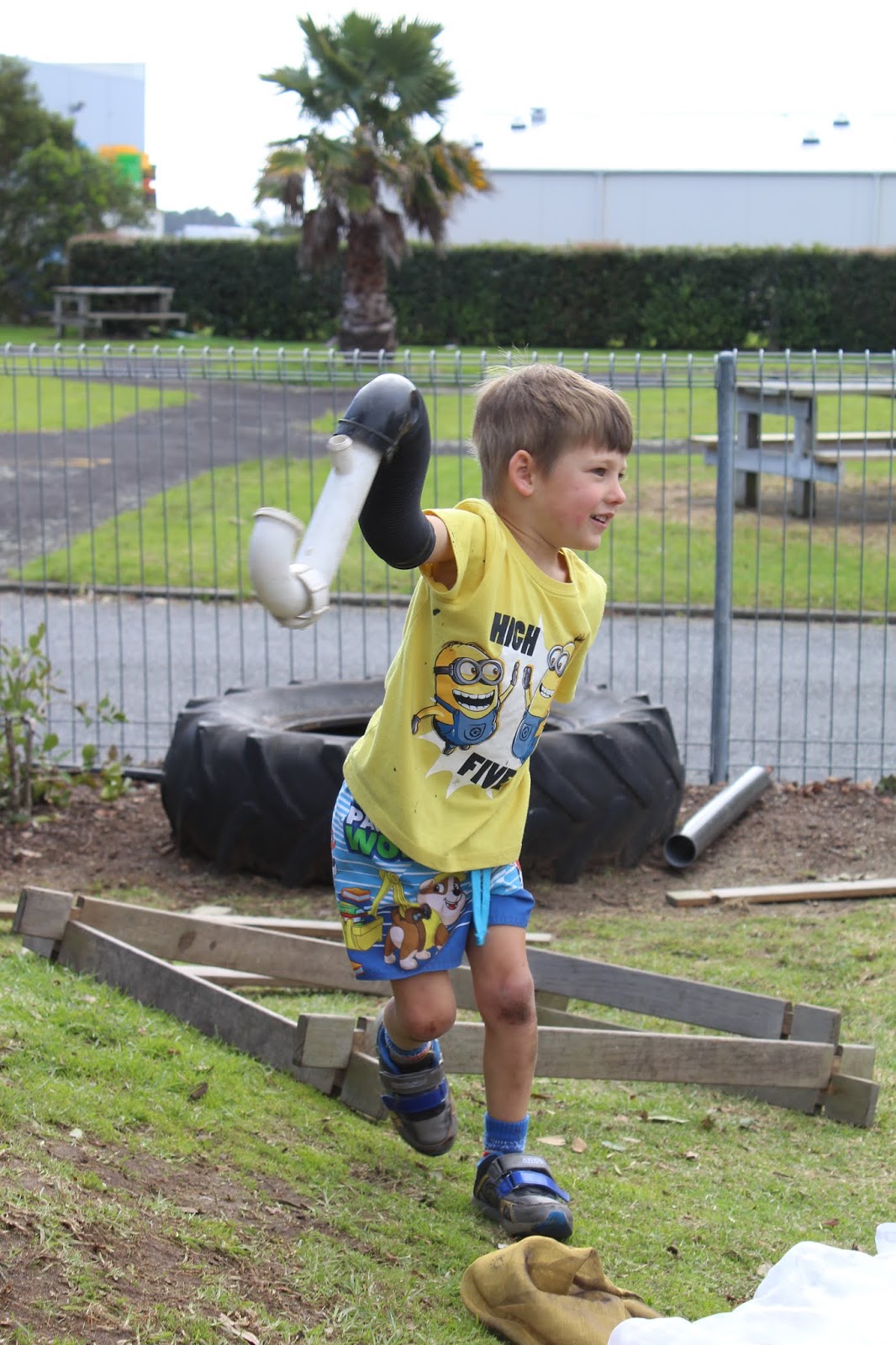
               Torben: "I got a robot arm."                            Alessia I: "This is the road."

                                                             Aiden: "I'm a Christmas tree."

“Children use loose parts to acquire, organize, and apply learning. By physically manipulating loose part, they learn about the objects and the relationships between them while developing problem-solving skills” (Daly & Beloglovsky, 2015).

Torben: "We can tie the wheels onto the board. We can attach that to the back. You can twist it under."

Isabel: "Some wheel cars have tyres."

 
Carter: "I'm making a go cart. Maybe if I twist tighter, maybe it will hold it cause it stick. This is gonna take long!" 

Children's thoughts on loose parts…

“Really good because when they are really good they stay together in harmony. I use them to build some things; I’ve been building a fashion show, I’ve been using them for a car” - Alessia I.

“It’s so cool, I builded a car with Torben. We had some wheels and wood and we had a steering wheel” - Isabel.

"I was just making something. I liked making triangles and they are prickly. They good for bending" - Aiden.

"I made a go-kart last time. Well it was too hard. I'm gonna build a go-kart now" - Carter.


Arohanui
Lauren.